
Call us now :08045477148
 Send Inquiry
 Send Inquiry
Spiral Condenser
Spiral Condenser Specification
- Number of Pipe
- Single continuous spiral tube within the condenser
- Thickness
- Glass wall thickness: typically 2.5 mm - 6 mm
- Diameter
- Coil inner diameter: 8 mm to 22 mm (varies by design)
- Temperature
- Up to 200C (Borosilicate glass maximum safe operating temperature)
- Max. Capacity
- 250 ml to 2000 ml (depending on model/variant)
- Max Pressure
- Up to 0.5 bar (maximum recommended for borosilicate glass condensers)
- Air Volume
- N/A (not applicable to this type of condenser)
- Condition
- New
- Structure
- Double-walled borosilicate glass spiral tube inside an outer glass jacket
- Liquid Flow Rate
- 120 to 150 ml/min (typical, depends on setup and tubing size)
- Working Presssure
- Normal atmospheric pressure or as per design tolerance of borosilicate glass (up to 0.5 bar)
- Power
- N/A (operates by external cooling medium, no electrical input)
- Weight
- Approximately 2.5 kg to 7 kg (depending on size and glass thickness)
- Dimensions
- Length: 300 mm to 600 mm, Coil Diameter: 50 mm to 150 mm (typical range)
- Leakage Test
- Each unit is sub-merged and pressure-checked for leaks
- Cooling Medium
- Water or antifreeze solution recommended
- Maintenance
- Periodic cleaning with laboratory glass cleaner recommended
- Packaging
- Shock-proof foam and box packaging for safe transit
- Material
- Borosilicate 3.3 Laboratory Glass
- Joints
- Standard ground glass joints (NS 24/29, NS 19/26 or as specified)
- Color
- Transparent glass
- Type
- Laboratory glassware, Heat exchanger/Condenser
- Custom Sizes
- Available upon request
- Orientation
- Horizontal or vertical usage possible
- Application
- Condensation of vapors in distillation, reflux setups, rotary evaporators, chemical laboratories
About Spiral Condenser
We are acclaimed in this domain as the notable manufacturer, exporter and supplier of Spiral condenser. The provided condenser is suited for getting precise composition and properties of chemicals. The offered condenser is manufactured at our advanced manufacturing unit using utmost quality components and ultramodern techniques. Furthermore, our clients can avail the offered Spiral condenser in different technical specifications at the best market rates within the committed time frame from us.
Features:
- Easy to operate and maintain
- Lower power consumption
- Hassle-free operation
- Longer service life
Exceptional Chemical Durability
Crafted from Borosilicate 3.3 glass, this spiral condenser offers outstanding resistance to chemical corrosion and thermal shock. Its robust construction ensures it can withstand temperatures up to 200C and normal lab pressures, making it suitable for demanding laboratory environments. This durability supports long-term, reliable operation in various experimental and scale-up processes.
Optimized Cooling and Versatile Application
Designed with a spiral coil inside a double-walled glass jacket, the condenser achieves efficient vapor condensation. Its compatibility with water or antifreeze as the cooling medium makes it adaptable to different laboratory setups. It is ideal for use in distillation, reflux, and rotary evaporation, ensuring high performance in both educational and research laboratories.
Safe and Customizable Design
Each spiral condenser is rigorously tested for leaks, providing peace of mind during use. The transparent glass allows for easy visual inspection of operations. Available in various lengths, capacities, and joint sizes, it can also be customized to meet specific laboratory requirements, while robust packaging ensures safe delivery worldwide.
FAQs of Spiral Condenser:
Q: How is the spiral condenser installed and what orientation can it be used in?
A: The spiral condenser is fitted to distillation or evaporation apparatus using standard ground glass joints (NS 24/29, NS 19/26, or as specified). It can be mounted in either horizontal or vertical orientations depending on your experimental setup and available space.Q: What is the recommended process for cleaning and maintaining the spiral condenser?
A: Periodic cleaning with a laboratory glass cleaner is advised to maintain efficiency and prevent clogging. Rinse thoroughly after each use, and ensure the condenser is fully dry before storage or reuse. Avoid abrupt temperature changes to prevent thermal stress on the glass.Q: When and why should a spiral condenser be used in laboratory setups?
A: Spiral condensers are most effective during distillation, reflux, and rotary evaporation processes where efficient vapor condensation is required. Their design maximizes surface area contact with the cooling medium, thereby enhancing heat exchange and improving the condensation of volatile compounds.Q: Where can custom sizes or joint configurations be requested?
A: Custom sizes and variations in joint specifications can be arranged by contacting the manufacturer, exporter, or supplier directly. They will work with your requirements to provide condensers that fit your specific applications and equipment.Q: What are the main benefits of using a borosilicate glass spiral condenser?
A: Borosilicate glass provides superior thermal and chemical resistance, supporting safety and longevity. The spiral design improves cooling efficiency, while transparency allows for visual monitoring. Its leak-proof construction and robust packaging further ensure reliable performance and secure delivery.Q: Which cooling media are recommended for this condenser, and what is the typical flow rate?
A: The spiral condenser is designed to operate efficiently with water or an antifreeze solution as the cooling medium. A typical liquid flow rate through the condenser is between 120 to 150 ml per minute, though this can vary based on setup and tubing size.Q: How is product safety and integrity guaranteed during delivery?
A: Each spiral condenser is individually leak-tested by submersion and pressure checking before shipment. For safe transit, units are packaged in shock-proof foam and placed within sturdy boxes to minimize the risk of breakage or damage during delivery.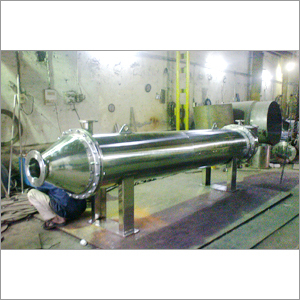
Tell us about your requirement

Price:
Quantity
Select Unit
- 50
- 100
- 200
- 250
- 500
- 1000+
Additional detail
Mobile number
Email

More Products in Heat Exchanger And Condenser Category
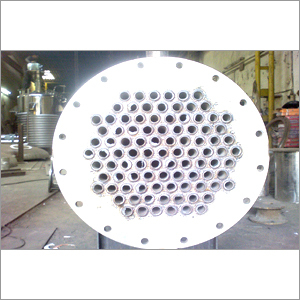
Shell And Tube Type Condenser
Max Pressure : 24 Bar
Air Volume : N/A (Water cooled)
Dimensions : 1200 mm x 400 mm x 400 mm
Weight : 80120 Kg
Power : 13 HP
Max. Capacity : 550 Ton/hr

 Send Inquiry
Our Products
- Resin Plants
- Reaction Vessels
- SS Storage Tanks
- Heat Exchanger And Condenser
- Chemical Receivers
- Grease Plants
- Stirrer And Agitator
- Blenders And Mixers
- Chemical Reactor
- Industrial Mixer
- Storage Vessel Tank
- Blending Machine And Plant
- 50 KL Reactor Process Vessel
- SS And MS Pilot Machine
- Automatic PVA Emulsion Plant
- Automatic Reaction Kettle
- Industrial Distillation Plant
- Phenol Formaldehyde Resins
- Polyester Resin Plant
- Acrylic Emulsion
- Distillation Plant And Equipment
- Automatic Basket Mill
- Automatic Drum Flaking Machine
- SS Industrial Heat Exchanger
- SS Condenser Tube


402/22, Sonam Prerna CHSL, Golden Nest, Phase - 2, Bhayandar (East),Mira Bhayandar - 401105, Maharashtra, India

Mr Prakash Vind
(Proprietor)
Mobile :08045477148
 Send Inquiry
 Send SMS
Developed and Managed by Infocom Network Private Limited.
